Diagnosis: Anxiety

I figured that today was a good day to start talking about my personal Diagnosis.  Though, I will be breaking them down in to single categories, in full I am diagnosed with C-PTSD, Anxiety Disorder and Clinical Depression.

Today, we’ll talk about anxiety on a personal level.  How it has affected me personally and how I’ve felt about it, etc.

The first thing that we’re going to do is define the diagnosis of an anxiety disorder.
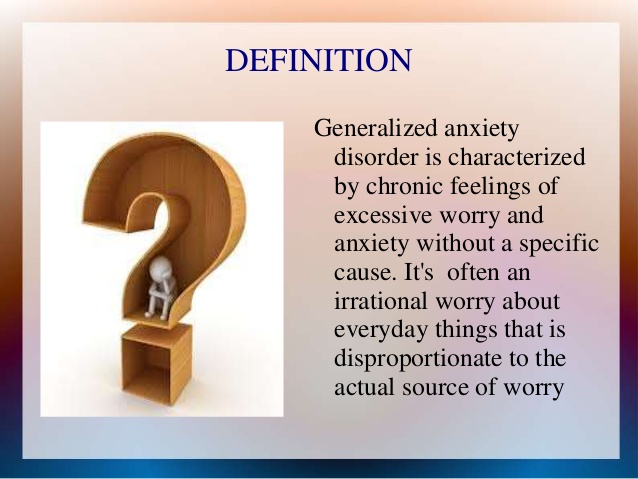
generalized-anxiety-disorder-3-638

Next, let’s take a look at some of the symptoms.  When doing so, please remember that the symptoms are not always limited to this list.
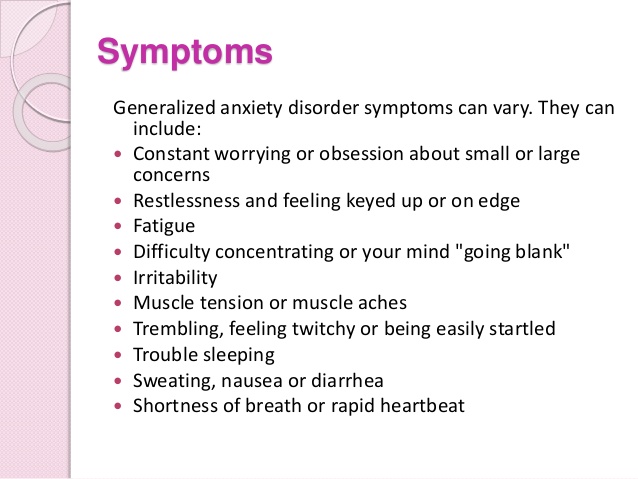
anxiety-disorders-6-638

So, on a more personal level, let me tell you about my symptoms.  I can relate to the constant worrying or obsession about small or large concerns.  These are mostly caused by my mind-reading and other unhelpful thought patterns that we’ve previously discussed.  I tend to think everyone hates me or is against me.  I always assume the worst and by doing that, I think that I’m helping myself when in reality, I’m only hurting myself.  I am constantly in a state of somewhere between asleep and awake, as I suffer from sleep problems.  I’ve had my medications changed on me four times within the last two months and I can tell you, I wish they could find something that works.  I wake up on average, every three hours while sleeping.  And this is after I’ve had trouble falling asleep to begin with.  If I become highly tired, I also become very irritable.  Irritability is also caused by taking on too much at one time and overwhelming myself.  I’m absolutely no stranger to it.  Due to the amount of stress that I place on myself, I do become physically tense and experience a lot of back and shoulder pain.  It’s not a pleasant experience at all.  When it’s at it’s worst, I shake a little bit because I’m very afraid of what’s coming next.  Even if I have no reason to be, I am very afraid.  I often sweat a lot in states of extreme nervousness and if I can’t resolve the issue quickly, I become angry with myself and begin to feel sick to my stomach.  The physical ailments aligned with anxiety are more than you could ever possibly imagine.  It’s not until I’m having panic attacks, that the shortness of breath, tight chest, throat closing and rapid heartbeat start to occur.

All of that probably sounds like I’m exaggerating.  But, sadly I’m not.  I wish I were.  And that’s not even the complete list of my symptoms.

So, next comes the panic attack for me.  I’m going to take this time to define that for you.

anxiety-panic-attacks

These are NOT fun.  And I do not wish them upon anyone.  I often lose my balance, find myself swaying, feeling as though my throat is closing along with chest pain and hot flashes.  Palpitations, Sweating, and Trembling go right along with those things.  It’s exhausting having a panic attack.  And you can never really tell when they will hit.  There are a few obvious triggers for me personally, but I could be out shopping or be faced with having to make a decision and suddenly it hits.

So, along with symptoms, come a list of disorders or other common ailments.
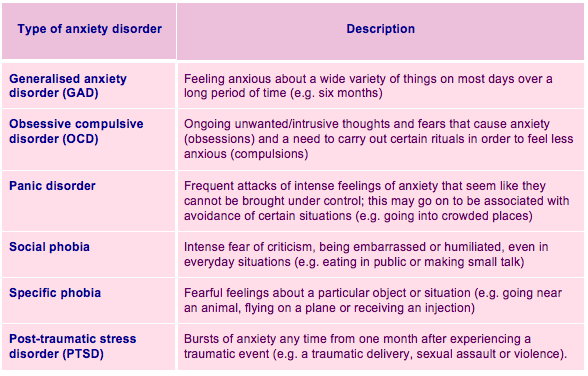
screenshot-2014-02-16-10-04-17

So, the disorders above are very specific in what they are attributed to.  If you want to know which ones I relate most to, they are: PTSD, Social Phobia (Social Anxiety), Panic Disorder and Generalized Anxiety.

PTSD we will talk about in another Diagnosis Section of my blog.

As far as Social Anxiety goes, it’s the worst.  I always think people are super critical of me and worry about what they will think or how they will judge me.  I feel super awkward trying to start and maintain a conversation, like I’m just waiting to say that one weird thing or embarrassing myself in the process.  So, I end up isolating myself, to avoid the fear and anxiety of it.  This is something that I’m now working on doing better at.  I’ve been knocking on my social phobia’s door and saying hello more frequently.  But, it’s difficult to want to do it.

Oh my, Panic Disorder.  I can relate to what the definition says about avoiding certain situations, places and things.  I dislike crowds very much, I feel like I can’t move in them.  It’s like I’m being squeezed very tightly by a bunch of pressure that is made up of the people surrounding me.  So I avoid anything that puts me into that situation.  I will panic.  I have to sit on the end row in the movie theaters and I must know where the nearest restroom is.  Maybe that’s weird to you, but knowing how my body functions sometimes, I just feel it’s for the best.  And I don’t want to have to crawl out over people if I need to leave suddenly.

General Anxiety (GAD) I feel is what most people relate to.  But, I feel as though I take it to the extreme.  I worry and then I worry some more, about anything and everything…even if I have to actually actively find something to worry about.  I will worry.  Whether it’s about finances, relationships, what people think or feel about me, or even whether I’m questioning myself.  It’s at times so overwhelming and hard to contain.  But, I guess that’s why I’m on the meds that I’m currently on.

Some days, I feel as though I can’t even get out of bed, the feelings are just too much for me to want to face.  It’s scary.  It’s the abundance of this along with my depression that made me do what I did to myself whenever it got to be too much.

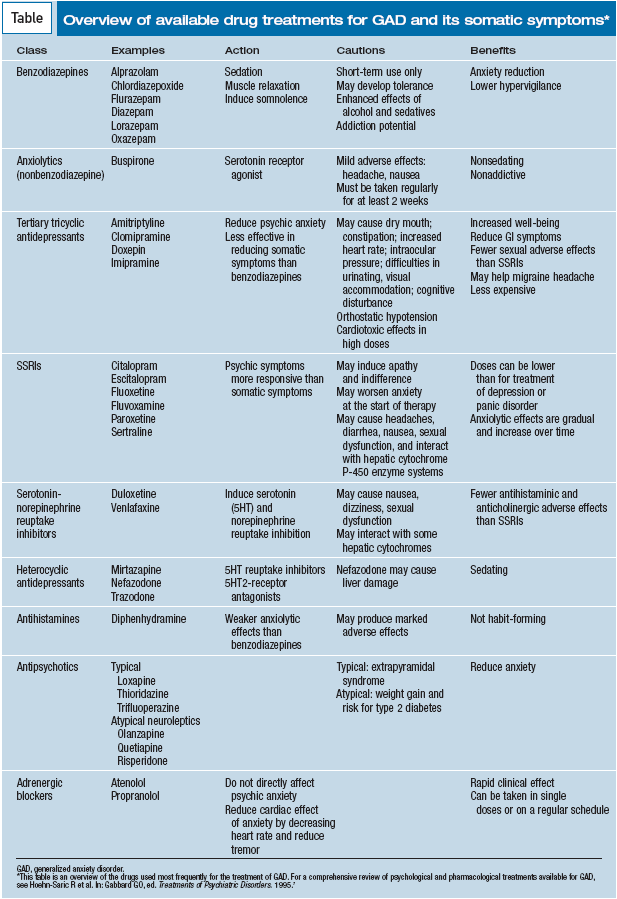
This brings me to medications.  I’m sure many of you are as familiar with these as I am.
0703pthoehn-sarict

Since my anxiety diagnosis, I have seen a lot of medications come and go.  From this list alone, I’ve been on: Mirtazapine, Trazodone, Venlafaxine, Fluoxetine, Citalopram, Buspirone, and maybe a couple more that I’ve forgotten by now.  And maybe a few that aren’t even listed.  I know for certain I don’t see Klonopin or Effexor up there, but I’ve been on those as well.  They may be more for depression though, we’ll find out later.

Some other natural things that I do in order to keep my anxiety in check are to clean, declutter and organize my house.  And since I’ve figured out that the Lavender scent is supposed to help, I have gone way overboard with that.  I used to drink chamomile and/or sleepy time teas.  But, I haven’t done that in quite a while now.  I think I found it relaxing, for what that’s worth.  And then there’s the giant elephant in the room….exercise.  Who wants to do that?!  But, sometimes, there is no better cure for what ails me than to drag my butt outside or even just out of bed and get to work on something constructive.

There will always be this war inside of my head.  But, at least I’m fighting and not giving in.

This too, shall pass.

A B C Theory of Emotional Disturbance

Facts are not Feelings.

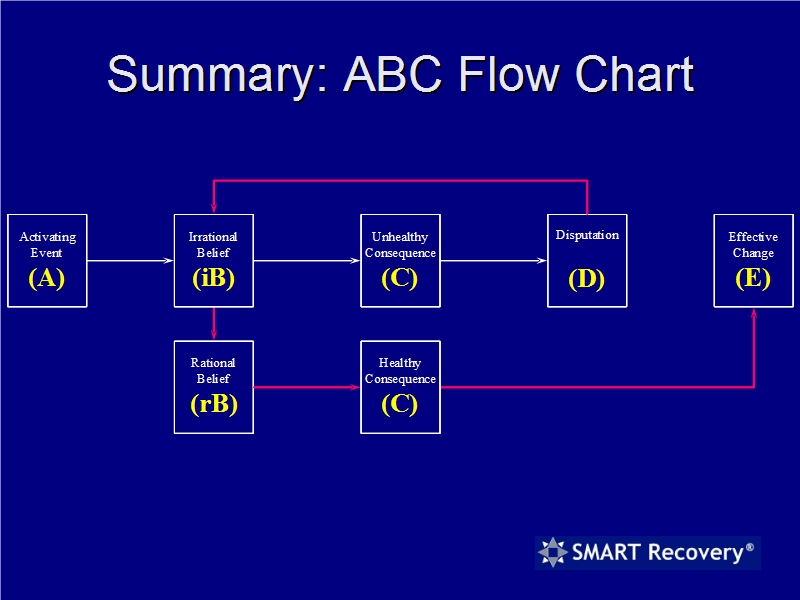
ABC Theory of Emotional Disturbance: “It is not the event, but rather our interpretation of it, that causes our emotional reaction.”

A-the trigger or stressor (ie a break up)

B-the belief and/or self-talk (ie mind-reading or catastrophizing)

C-the Emotional Consequence (ie depression)

D-the Debate of Crazy Thinking (ie talk with self or others to challenge one’s self)

E-the Emotional Effect (ie rational thoughts were met and a finalized feeling)

img18

I have had a lot of success with identifying my trigger and then asking myself rationally, “what can I do to elimate such and such?”  It’s reduced my anxiety and stress tremendously.  So, I urge you to take the ABC Theory and apply it to your life as much as possible.

Here, I will give an example of the ABC Theory in action:

A-Activating Event- Your girl friend breaks the news that she is going out with another guy, and therefore wishes to break up your relationship.

B-Beliefs/Self Talk-You begin to think things such as “I really must be a worthless person”, “I will never find a great woman like her”, She doesn’t want me; therefore no one could possibly want me” and/or “this is so awful!  Everything happens to me!”, “I can’t stand the world being so unfair.”

C-Emotional Consequences-You begin to fall into depression and/or Isolate yourself.

D-Debate of Crazy Thinking-“Where is the proof that because this girl wishes to end our relationship that I am a worthless person?  Or that I’ll never have a good relationship with someone else?  Or that I couldn’t possibly be happy alone?” and/or “Why is it awful that I am not getting what I want?”, “Why shouldn’t the world be full of injustices?”

E-Emotional Effect-Sadness (“Well, we did have a nice time and I’m sorry it didn’t work out–but we did have some problems and now I can find a new friend.” or Annoyance (“It’s annoying that she was seeing someone else but it isn’t awful or intolerable.”)

I think you have a better picture of where this is going now.  Follow the rB (Rational Belief) path and things will go so much better for you.  But, if you can not do it right away, you can go in circles with yourself until you become more rational in your way of thinking.  This is just one more thing that takes plenty of practice.

I get stuck in negativity a lot.  Lately, I’ve had to talk myself out of it and I’m finding it easier and easier to do each time.  Especially since I’ve identified a few things that trigger me.  I can avoid or deal with those things proactively and begin my self-improvement process.

Negative Thoughts Trigger Negative Feelings

So, what does the topic of this blog mean?  Simply put, when you let the negative thoughts into your head without challenging them, the result is that you then cause yourself negative feelings.

leo

Maybe you’ve seen things posted as trigger warnings.  Do you know what this means?

noun. 1. a stated warning that the content of a text, video, etc., may upset or offend some people, especially those who have previously experienced a related trauma: a blog post with a trigger warning for rape.

Triggers can be thoughts, places, things, people, feelings…work, school, new places…anxiety, stress, worry…money, crowds, being bullied…mainly anything that can lead us to a negative thought, reaction or feeling.  It’s very common amongst PTSD, anxiety and trauma survivors.

We used to believe that it was depression or anxiety that made people think negatively, but psychologists and psychiatrists have discovered that most people who struggle with anxious or depressed feelings first had negative, pessimistic, distorted thoughts that produced those feelings.

People often have completely different perspectives and reactions to the same situations.  For example, John and Jack both heard their Supervisor say to their Production Group, “We have to work harder and be more productive.  Too much time is being wasted on trivial matters and we need to get focused.”  John might think “The Supervisor is trying to increase production and make us more efficient.  I’d better do my part.”  But Jack may be thinking “The Supervisor is blaming me for our low productivity.  I am worried that I am going to get fired.  He never did like me.”  Jack returns to work feeling depressed and anxious and his preoccupation with these negative thoughts reduce his productivity.  On the other hand , John returns to work more focused and confident that the situation can improve.

They both experienced the same situation and came to very different thought processes and reacted differently.  That’s so interesting to me.  But, very real.

The thoughts and interpretations that you make regarding a circumstance have a very strong influence on the feelings that are generated.  Psychologists have identified several negative thinking patterns that are common to people who struggle with feelings of anxiety and depression.  These distorted thinking patterns can then trigger the negative feelings and can lead to chronic states of depression and anxiety.

This totally applies to my life.  I’m probably more guilty of being like Jack than like John.  However, I’ve made recent decisions to work on being more like John.  And it will take time and practice, but I’m confident in my ability to start over.  A new chapter, as I put it.  A nice blank slate for me to re-start and re-train myself and where I can continuously grow.  Not being too hard on myself for stumbling here or there, but knowing that I am headed in the right direction!

Here are some types of distorted thinking.  You may find  yourself identifying with some or all of them.  I will tell you right now that I have a hard time with the following: Black or white, Exaggerating, Judging, Mind Reading, Forecasting, and Self-Blaming.  You’ll see what I mean in the below ideas.

Black or White-Viewing situations, people, or self as entirely bad or entirely good – nothing in between.

Example: When Mary brought her vegetable salad to a neighborhood potluck, a hostess commented, “That’s our third salad.”  Mary immediately thought “She’s criticizing me.  She doesn’t like me.”

Exaggerating-Making self-critical or other-critical statements that include terms like never, nothing, everything, or always.

Example: Jack was accidentally overlooked when coworkers joined to make plans for lunch together.  Jack thought, “They never ask me to do anything.  Nobody wants me around here.”

Filtering-Ignoring the positive things that occur to and around self but focusing on and accentuating the negative.

Example: Kate had her hair cut short and styled differently.  After receiving many compliments from friends and family, one person was mildly critical.  Kate thought “I knew I shouldn’t have gotten it cut short.  I look like a freak.  People are laughing at me.”

Discounting-Rejecting positive experiences as not being important or meaningful.

Example: Tyler was complimented by his boss for his good work on a project.  He thought, “Anybody could have done that.  She doesn’t know anything about this project and I didn’t do anything special with it.”

Catastrophizing-Blowing expected consequences out of proportion in a negative manner.

Example: The teacher told Mary that her son was struggling a bit with math.  Mary thought, “This is awful.  Johnny is going to fail.  I knew I should have worked with him more.”

Judging-Being critical of self or others with a heavy emphasis on the use of should have, ought to, must, have to, and should not have.

Example: Jill made a sales presentation to a client.  The client was very attentive and made comments about being impressed with the product.  Jill thought, “He knows I stumbled over my words.  I should have been more prepared.  I have to be more relaxed or no client will ever buy from me.”

Mind Reading (Fortune Telling)-Making negative assumptions regarding other people’s thoughts and motives.

Example: Aaron inquired about a transfer to a new department.  When he was told the position was already filled, he thought, “This manager never did like me.  He knew I wanted that position but he just ignored me.”

Forecasting (Comparing experience to prior experiences that could lead to a self-fulfilling prophecy)-Predicting events will turn out badly.

Example: Kelly just finished an important job interview.  She immediately predicted that she would not get hired.  “I’ll never get this job.  That interview was awful and I am sure that I blew it,” she thought.

Feelings are Facts-Because you feel a certain way, reality is seen as fitting that feeling.

Example: Jim didn’t have plans for activity with any friends for the weekend.  He felt lonely and inferior.  He thought, “No one likes me.  I have a terrible personality.”

Labeling-Calling self or others a bad name when displeased with a behavior.

Example: Joan had a disagreement with her friend about where to meet for lunch.  Joan thought, “Betty is such a controller.  She never listens to anyone and insists on always getting her own way.”

Self-Blaming-Holiding self responsible for an outcome that was not completely under one’s control. (This is totally ME!)

Example: Paula’s friend had a minor traffic accident while she and Paula were riding to the mall.  Paula thought, “This accident was all my fault.  I should not have been talking to Jackie while we were driving.  Even though that other car hit us, I am sure Jackie could have avoided it if I would have kept my mouth shut.”.

I have been over this in my group session and that’s why I can tell you which ones suit my personality and my thought process.  None of these are really good ways at looking at things, so we should all be held responsible for changing our perspectives and for stopping the assumptions.  Easier said than done, but again…baby steps.  Walk with me.  Very slowly.  And every time our voice in our head is telling us to react to something in a negative manner, be sure to question that thought.  Argue with it inside your head if you have to.  I do!  And man, it’s exhausting.  But, the war can never be won if it’s never fought.

Apply these 11 common types of distorted thinking to your own way of thinking.  List at least three examples of your own thoughts that lead you to feeling depressed and anxious.  First describe the event that prompted you to feel depressed and then describe the thoughts that promoted the bad feelings.

This is where I highly recommend journals or writing things down, so that you can review them later and recognize what happened.  This way, you can eventually discover patterns and thought processes that need to be changed or worked on.  If we can stop the negative thoughts from triggering us, then maybe we can stop the negative feelings, too.

What do you think?


Let’s Talk About Self-Esteem

I wanted to take a moment to talk about self-esteem because I have virtually none and I really need to reinforce this lesson, for myself.  And if it helps you, too, that would be terrific!

“Do not fall into the trap of believing that you are back to square one, most people have bad days – it’s called being human.”

Go ahead and think that one over.  I know I have to, several times.  In essence, it simply means that the bad days will come and maybe you even become temporarily derailed from your track of progress.  But you shouldn’t lose track of your personal growth goal when they do come – and they WILL come (you’ve heard me say this many times – it’s difficult for me to swallow at times).  Just remember don’t beat yourself up over it.  And when you can calm yourself and get your thoughts together to make a rational decision, pick up where you left off…even take a step backwards and look at how you can move forward from that point, if you have to.  It can be done!  I promise you.

Also remember this: “When writing the story of your life, don’t let anyone else hold the pen”.  Your story is your own, you can begin a new chapter for yourself any time you so choose to do so.  Just make sure that you are the one making the decisions and directing your life path.  Don’t let anyone else have so much control over you and your life that they are essentially writing your story.  No!  This is YOUR story…YOU make it happen.  Hold that pen tightly and don’t let go of it.

If someone is a constant source of negativity, no matter how much you love them or care for them, let them go.  It’s something you have to decide to do.  But, what are they contributing to you from the relationship other than sadness, self-doubt, hurt feelings and possibly a lower self-image.  I’ve been there, mostly in my past.  If they are only memories that hold you back, choose to forgive or forget.  Make the choice to not let that memory control who you want to be today.  It’s a toughy.  But if you’re ready, you’ll know that it’s an easy choice to make.

Here are a few tips for building Self-Esteem:

  • Do not set yourself up for relapse.
  • Do not put too much on your plate, too soon.  That’s pretty much a set up.
  • Put yourself into situations where the probability of success is higher.

They sound easy enough, right?  I believe that you and I can achieve them easily once our minds are clearly made up with the conscious decision to think and feel better in our own skin.

Some strategies for Building Self-Esteem

Crises of self-esteem are a part of the “human experience”.  When you feel troubled by low self-esteem, review the suggestions below and choose those that are relevant to YOUR personal situation and work on them.  Be patient with yourself, okay?  Change takes time and hard, consistent work.

  1. Free yourself from “should haves”.  Live your life on the basis of what is possible for you and what feels right to you instead of what you or others think/feel you “SHOULD DO”.  “Should haves” distract us from identifying and fulfilling our own needs, abilities, interests, and personal goals.  This leaves us with unmet needs.  And no one wants to deal with those.  Find out what you want and what you are good at.  Value those and take actions designed to fulfill your positive potential.
  2. Respect your own needs.  Recognize and take care of your own needs and wants first!  Identify what really fulfills you –not just immediate gratifications.  Respecting your deeper needs will increase your sense of worth and well-being.
  3. Set achievable goals.  Establish goals on the basis of what you can realistically achieve, then work step-by-step to develop your potential.  To strive always for perfectionism in your goals invites stress and failure.  That is the opposite of what we want.  An example of this is when you’re in school and you tell yourself that “anything but an A in school is always unacceptable.”  Don’t do this to yourself.  You’re better than that and we both know it.
  4. Talk to yourself POSITIVELY.  Stop listening to your anxiety or your “cruel inner critic”.  When you notice that you are doubting or judging yourself, replace such thoughts with self-accepting thoughts, balanced self-assessment and self-supportive directions.

    This is the hardest one for me to do, honestly.  My anxiety typically gets the best of me.  But, after I step through the doorway of my fear, I find that things aren’t nearly as bad as I expected them to be.  I listened to the devil on my shoulder, rather than my self-loving angel.  Big mistake.  I encourage you, don’t fall for what your anxiety is telling you.  It will only bring you pain.  And that’s what we’re trying to avoid here.

  5. Test your reality.  Separate your emotional reactions, such as fear and bad feelings, from the reality of your current situation.  For example, you may feel stupid, anxious, or hopeless about a project or event.  But if you think about it clearly, you may still have the ability and opportunity to accomplish something in it.
  6. Experience success.  Seek out and put yourself into situations in which the probability of success is high.  Look for projects which stretch, but do not overwhelm, your abilities.  Imagine yourself succeeding.  Whatever you may accomplish, let yourself acknowledge and experience your success and good feelings about it.  Bask in your progress and keep at it!
  7. Take chances.  New experiences are learning experiences which can build self-confidence.  Expect to make mistakes as part of the process; don’t be disappointed if you don’t do it perfectly.  Feel good about trying something new, making progress and increasing your competence.  When you practice this one, remember “Practice Makes Perfect”.  If you fall off of your bike, get right back on that baby and pedal away.  Before long, you’ll be able to ride that bike with no hands!  ha-ha.
  8. Solve problems.  Do not avoid problems, and do not moil about them.  Face them, head on!  Identify ways to solve them or to cope with them.  If you run away from problems that you can and should solve, you threaten your self-confidence.
  9. Make decisions.  Practice making and implementing positive decisions flexibly, but firmly.  Trust yourself to deal with the consequences.  When you assert yourself, you enhance your sense of yourself, learn more, and increase your self-confidence.  Just remember that YOU need to be in control of the decision making and that it should positively affect you in some way.  These decisions can start out small and grow larger as you practice the skill.  Remember the quote about holding the pen to the story of your life.  That will come in useful here.
  10. Develop your skills.  Know what you can and can not do.  Assess the skills you need; learn and practice those.  For example, if you want to start painting pictures or taking photographs.  You will need to identify the steps in doing either of those.  Then you pick up the brush and/or the camera and you start practicing.  Maybe you ask someone to model for you to begin your portfolio.  Maybe your first painting is something that you needed to copy in your own style.  Either way…..the steps are there and you know your own limits.
  11. Emphasize your strengths.  Focus on what you can do rather than what you can not.  Accept current limitations and live comfortably within them.  Even as you consider what your actual strengths are, what you might want or need to develop next.  There are only limits that you set on yourself that are in  your way.  You can learn to push the boundaries, without overdoing it.  Just focus on what you’re good at and what you know you’re capable of and the rest will fall into place.
  12. Rely on your own opinion of yourself.  Entertain feedback from others, but do not rely on their opinions.  Remember that opinions are NOT facts; therefore, they may be made up or fictional.  When you rely on someone’s opinion, it may actually be self-defeating.  So, don’t do that!  Instead, depend on your own values in making decisions and deciding how you feel about yourself and what is right for you to do.  This is your life — do what you want and be happy with it.  Be prepared to face the consequences either way.  Because following your heart, values and own decisions leaves only you accountable.  So, make them count!

Always remember to debate and replace your negative thoughts.  You can not let people steal your joy.  If it’s something that you want to work with and move forward with, don’t give others the power to take that away from you.

I say that, but I am one of the most guilty when it comes to letting others opinions, along with listening to my own thoughts and what my own fears and anxiety tell me.  I let those things hurt me, drag me down and just make myself so much more fearful than anyone should be.  That’s why I’m sharing these things with you now.  We’re stronger than we know.  And it’s time to let go of all of the negativity.  If we can make decisions that we feel good about and that make us happy–then our own consequences are the only things we have left to worry about.  If someone else doesn’t like it.  They don’t have to.  As long as what we’re doing makes us happy, screw them.  Their opinions are not factual and mean nothing in our lives unless we give them the power to.  Shut that power down.

Ch-Ch-Ch-Changes

During my two week stay at the Hospital, one of the group sessions was about making a change in your life.  And let’s be honest…I could make some good changes to my mindset and life.  So with my happiness as a goal, I was very attentive to the instructor and ready to fill out my Change Plan Worksheet Outline.

If you want to follow along with me, here is a copy of the Change Plan Worksheet.  You can print this out or review it to decide what kind of changes may fit your personal goals and growth towards a happier you.

Here, is where I’m going to go step-by-step through my own.  This will not only give you an example, but will also show you that even small changes can make a big difference.  And the more small changes that you make, the bigger the change is to the larger picture.  I hope you understand where I’m coming from.  If not, feel free to leave me questions in the comments section below.

  • The changes I want to make are:  to set up personal boundaries for myself and to not be so hard on myself or take on the worries of the world.
    • List specific areas or ways in which you want to change: I need to say “NO” more often and realize that it’s not selfish to take care of myself; not faulting myself.
    • Include positive goals (beginning, increasing, improving behaviors): increasing my personal levels of happiness and positivity.  Increasing the number of thoughts that I “challenge”.
  • The most important reasons why I want to make these changes are: to be a happier & healthier version of myself.  Because my life depends on it.
    • What are some likely consequences of action and inaction: I could end up with a different outlook on life and a more positive mindset.  The other consequence could be a life full of unhappiness and anger; leading to the possibilities of suicide.
    • Which motivations for change seem most important to you?  My ultimate happiness and quality of life need to be improved.
  • The steps I plan to take in changes are:  to take baby steps and to worry less about what people think of what my choices are or what I’m doing.
    • How do you plan to achieve the goals?  By first achieving smaller goals that will accumulate to change the bigger picture in my life.
    • Within the general plan, what are some specific first steps you might take?  Setting healthy and clear boundaries for myself; begin cultivating the life that I want to lead and making the changes that I think are in my best interest.
    • When, where and how will these steps be taken?  They will begin with today, it will take a lot of emotional and mental energy.  So, I plan to take them on one by one…individually, so that I do not add to my anxiety and/or become overwhelmed.
  • The ways other people can help me are:  Others can hold me accountable for the goals that I’ve made clear to them.
    • List specific ways that others can help support you in your change attempt: Supporting my decisions and doing what they can to ensure that I follow through with my goals.
    • How will you go about eliciting others’ support?  I plan on stating my goals clearly to a hand full of people.  Then, it will be important for me to acknowledge issues as they arise and getting their help with challenging the unhelpful thought or in eliminating my discouragement.
  • I will know that my plan is working if:  I am meeting my short-term, smaller goals to achieve progress towards a larger outcome.
    • What do you hope will happen as a result of the change?  I hope that I can find hope, peace, personal happiness and the light that I know can shine out of me.
    • What benefits can you expect form the change?  A more consistent and positive mindset.  Hopefully to feel more at ease within my own skin, more confident, and less worrisome with whatever anyone else thinks or with burdens that are not my own to carry.
  • Some things that could interfere with my plans are:  Relapse, not following through, people in general with their negative thoughts and attitudes that will only bring me down.
    • Anticipate situations or changes that could undermine the plan:  There are situations where someone may disagree with what I say I need for myself.  There are people who may question whether or not I am competent.  There will always be someone that is just sitting on that back burner waiting for me to fail – and they would absolutely love it.
      • What could go wrong?  I could not achieve goals that I have set for myself or an event or person could interfere with my progress, only holding me back.
      • How might you stick with the plan despite the changes and/or setbacks?  I will challenge myself by attempting to change my own perspective.  I will be more flexible and if I cannot achieve one goal, I will substitute it by completing another.  I will realize that other people are not living my life and that there are always ways to go around or over each obstacle put in my path.

My personal goals may be humorous to you.  But, they are mine.  You get to decide what kind of goals to make for yourself and ONLY yourself.  You cannot depend on anyone else to make the desired changes to your life for you.  That’s unreasonable and impossible.  And you can’t do nothing and expect things to end up differently.  This is a decision that you have to make for yourself.  And that you will have to follow through with, for yourself.  You can ask for help from others, by asking to be held accountable for your desired changes.  But, after that….it’s all up to you.  By being held accountable, it’s asking for support – but that person isn’t going to force you to make the change that you already said you wanted.  And when you get discouraged, keep looking at the horizon.  It’s in front of you, not behind you.  Don’t be afraid of making smaller goals or changes.  Because after completing a couple of those, you’ll be headed in the right direction!

I wish you luck and am sending my support.  You now know a portion of the goals I’ve set out to achieve through intensive group therapy.  I plan to continue sharing….

Here are two more handouts that you may find helpful in this process.  I encourage you to at least read them over and think about them for a while:

Part 1 – Challenging My Unhelpful Idea

Part 2- Recognizing Discouragement, Out-thinking Discouragement, Seeking Out Encouragement, & Courage/Inner Strength Building Plan

Decluttering My Life

I have been a little absent from my blog as of late, I apologize.  I’ve been wanting to write more – and I will.  But, I’ve been working on me a little bit more and that means some things have been sacrificed in the process.

I talked about something called “cultivating your environment” in a different blog entry.  Well, that’s exactly what I’ve been doing.  The first day, I took everything out of the office closet and designated it into three groups: it has a purpose & keep it, donate it, or trash it.  I did this by asking myself if whatever I had in my hand actually contributed anything to my life and if it had a purpose for later.  If I could answer “no” to either question, it was gone.  I didn’t second guess myself and I had made the decision on the spot.  I can see my closet now!  And…even better than that…it’s really organized and everything is in it’s own place.  Holy cow.  It.is.possible.  Who knew?!

And if you know anything about me from prior posts, it’s that I am one of the most indecisive people in the world.  I can’t make decisions to save my life.  But, the fact that I could choose what to do with an item based on a couple of simple questions I asked myself, that feeling is something else!  It gave me a sense of accomplishment, like I’m moving in the right direction.  It also gave me confidence to do the things I had been afraid to do for so long.  In the end, and most importantly, it gave me a sense of happiness.

The next day, I took a corner of the office, itself, one at a time and threw away anything that didn’t belong.  I did the exact same thing I did with the closet.  Asked myself the questions and followed through accordingly.  I even started a change jar!  All of the change I find or have in my pockets, etc will go into this sole jar.  And either when it’s full or at a certain time of the year (I haven’t decided THAT much yet!), it will be brought to the bank and cashed in for a few extra dollars.  It doesn’t seem like I could possibly go wrong with that!

On the third day, I tackled the bathroom and the linen closet.  This might not sound like much to you, but trust me – there was so much junk in both.  Three trash bags later and I was done.  I created so much more space!  I even folded all of the towels differently to create more space for them in the linen closet, instead of just kind of stuffing them in there.  I threw away a ton of dog items that were expired.  The list just goes on and on.  But, I feel really good after just a few days of decluttering so far.

This feels like real progress.  And Im not feeling overwhelmed or anxious when I go into these rooms now.  That’s the best part.

My home hasn’t felt like “home” to me in quite some time.  And the clutter has been looming over me for years.  It’s so nice to take a breath and just be comfortable where I am instead of isolating myself to the bedroom or something silly like that.  I can live here again and be okay.  At least that’s what I think will happen by the time that I’m done.

I did some research on essential oils, also.  And found that lavender oil is good for creating a relaxing, calming environment.  I found a wax melter, too, at a local thrift store.  So, when I am done decluttering, the plan is to spread my diffusers and the wax melter to the major parts of my home in hopes of cultivating even more of that relaxing environment that I desperately need.

I walked into the Shelter today for the first time since hospitalization.  Man, was I nervous.  But they were so warm and welcoming to me.  I almost cried at one point because I truly loved my job at the time that I was hitting rock bottom.  But, for me – I need to take my time in jumping back into anything.  Causing myself any extra stress, anxiety or discomfot would not be helping myself to heal.  It would be hurting the goals that I’ve set for myself to complete in my own time; however much time that may take.  I can’t force myself to take on more than I think I can handle right now.  It hurts to think anyone there may not understand or to think that they may hate me for leaving.  But, those could just be thoughts in my head that I need to challenge and deem them as unwanted.  I don’t know.

Right now, though, it’s just back to the basics for me.  Sleep is not coming easily either.  Which makes things just a little more difficult.  It takes me forever to fall asleep.  And once I do, I’m awake every three hours or so.  I’m so frustrated with it.  Which means, I’ll end up having another uncomfortable talk with my Doctor next week.  Whatever, it’s for the best, I guess.

So, in addition to decluttering my house, I’ve also initiated the process of decluttering my life.  If there are any negative people in my life, that drag me down on a regular basis, I realize now that they need to go – no matter how much they mean to me.  I can’t sacrifice myself for them anymore.  I might even try to talk to them and help them to understand what they do to me.  It boils down to if they can’t find a way to be a more positive and helpful influence and/or be encouraging in my life; they need to go.  Easier said than done.  But, that’s the decision I’ve made.  And it’s a good one.

All in all, this journey is a difficult one.  But, I’m putting one foot in front of the other and even if I’m only moving a few inches at a time…at least I’m moving.  And I’m moving forward instead of backwards.

One more thing, before I forget.  Along with the change jar and the decluttering, I’ve started a “positive thoughts jar”.  This allows you to sit down when you’re having an up day and jot down a few random positive thoughts or feelings.  You can do this every day or just on any day you feel positive.  And then when those down days come, because you KNOW that they will, you can open your jar and read your own positive thoughts to remind you that not every day is a bad day.  We often forget about the good days when our downward spiral begins.  I’m guilty of it for sure.  So don’t forget to also declutter yourself of those unwanted, unhelpful and soul eating negative thoughts/feelings.

Thank you for listening to my ranting.  Or rather, reading it.  Keep your heads held high and know that you are in the driving seat.  You’re the one holding the pen when writing your story, not someone else.  So, make it a damned good one.  I believe that you can.  I know that you can.  If anything, witness the beginnings of my transformation and revamp.  I’m living proof that things can change.

Let’s Get Personal.

c1c84a993204f9997cc9d95c6d0fa1e1

This photo really symbolizes where I am at in my recovery.  I’ve had a lot of positive days over the last couple of weeks, but there have been a couple of times that I have stumbled, fallen and had to get right back up to try again.  Every day is a fight.  But it IS possible.

Yesterday, nothing could help me.  I hurt myself, again.  And it was all because I couldn’t stop the storm from brewing inside of me.  The overwhelming sensation of everything that needs to be done on the path of my journey…

I tell you what.  This war I am fighting, it’s exhausting.  In every sense of the word.  Mentally.  Emotionally.  Physically.  I am drained.  And I haven’t even done much yet other than having kept my head above water and survived yet another day in a long series of days that are the culmination of my life.

And ever since my medication changed AGAIN…my sleep problems are endless.  I can’t get enough of it, or it’s broken and feels as though I’m awake all night long.  Thankfully, I’ll meet with my Doctor next week and hopefully we can figure this out.
I know I don’t say “Thank You” enough to the people who deserve to hear it.  And I am so thankful for the few people that I have that reach out to me during my struggles.  Please know, I am thankful for you.  I really am.  From the bottom of my heart.  I am.  My heart aches, as I know that there is nothing anyone can say or do to solve this problem for me-this one is mine and mine alone.  It can’t be any better until I make solid decisions within myself, which I have already started doing, to change my behaviors, my thoughts and my lifestyle.

I’m beginning to notice my “triggers” and that has been increasingly helpful.  I have my mood tracker set and I can mark any time that my mood changes, so that maybe I can find a pattern or circumstance for any of this happening.

I joined a Support Group this past Saturday.  You may have heard of NAMI, but for any of you that have not…I encourage you to look it up.  Even if you aren’t suffering from some sort of mental illness, if you’re a friend/family member to someone that is, they have tools for you.  It’s not much of a step taken.  But, it has helped me find a group of people that share some of my same concerns, issues and thoughts.  It’s some form of comfort to me in knowing that I don’t have to be alone.

I’m going to go into my diagnosis a little deeper in my next blog.  And I think I need to throw out there some things that people should/should not say or do in response to my ‘illness’.  The reasoning for that is because I’m so tired of hearing the same things that just throw more fuel into the fire.  It’s no one’s fault.  But, maybe I can do something to help prevent it from happening as much.

Until then…

Facing the costs

“For a long time it had seemed to me that life was about to begin-real life.   But there was always some obstacle in the way,  something to be gotten through first,  some unfinished business,  time still to be served, a debt to be paid.   Then life would begin.   At last it dawned on me that these obstacles were my life. ” – Alfred D’Souza
Life is a journey, not a destination.  It’s built one step at a time by what I do.   Managing my anxiety has cost me dearly.

It’s finally time for my life to begin.   I have anxiety, stress, and depression obstacles.

We all have a finite time here.  I’m not sure how you’ve been living, but I’ve been drifting through the days on autopilot.   Drifting here and there without a compass to guide me,  not questioning a thing.  And I’ve been spending a great deal of time attempting to keep my obstacles in check.

Is this what I want to be about?  The short answer is “no”.

I want to be more than my obstacles.

It’s no secret that I’ve lost control of where I was going or how I’ve maneuvered through my obstacles up until now.   And all the while it’s cost me my precious energy,  time,  opportunities,  freedom,  and relationships.   So,  it’s time to take a close,  personal look into my experience.   After all, nobody is more of an expert in my experience than me,  myself.

Interpersonal Costs 

I have isolated myself from people.   I have avoided social situations where I may have been overly anxious or uncomfortable.   Not only have I avoided them for those reasons,  but also because I asked myself “what’s the point?”

In existing relationships,  I’ve strained them significantly.   Sometimes being triggered and lashing out.  Often times because I couldn’t clearly communicate what I was going through.

Career Costs

I’ve always been a hard worker.   There’s no question there.   But I am insecure and uncertain.   There’s always a war being fought in my head over whether or not I’m good enough,  if I’ve done enough, or if I did it right.  I love to learn,  too.   And when I’m not given the opportunity to grow, I take it personally and assume the worst.

This time,  I had to miss work to seek out the help that I need.   And since the time I need to receive the help and recover is so indefinite,  I had to resign.

Health Costs 

There have been several effects of managing my worry, anxiety, and fear on my health.   I don’t avoid taking care of myself or anything like that.   But,  it has affected my ability to fall asleep or staying asleep.  It has also taken its toll on my mood,  making me more irritable and easily agitated.   It also has kept me from eating before.  Sometimes it even means my blood pressure goes way up.  The costs,  really,  in this category are endless.

Because of this,  I see a psychiatrist and psychologist on a regular basis.  I also compromise my health and body with medications.

Energy Costs 

I waste so much energy on worry,  stress,  and negative thinking.   Sometimes I experience difficulty with my short term memory, unable to recall the simplest of things.   I’ve developed a minor case of ocd,  having to repeat things in my head to calm myself.   And I’m mentally,  physicality and emotionally exhausted.  In severe situations,  I’ve become temporarily disoriented.   Often times finding myself walking in circles or wondering how/why I was where I was.

Emotional Costs

This is an important one.   As a result of trying to control my anxiety and depression,  I became sad and hopeless.  And on top of that,  lonely.   I would randomly explode in fits of anger and rage.   And ultimately,  all of my internal emotions led me to suicidal thoughts,  tendencies and to routines of self harm.

Financial Costs 

Oh my.   I don’t even want to think about this one.   I can’t think about it without instantly breaking down.  The cost is substantial.   Between regular office visits,  gas,  hospitalization and medications…I can’t even begin to list the costs.

Costs of Freedom 

You are virtually stripped of this when you become hospitalized.   Not to mention having to be observed around the house while upset,  in fear of what I may do to myself.   I am somewhat dependant on others to do certain things for me and I avoid interactions because I quickly become socially awkward.

The want to manage my mental illness is a trap.   And the more I struggle,  the tighter it gets.   But I’m determined to find a way out…

Here are some worksheets for you to examine your own struggles,  if you so choose.

What Has Your Anxiety Cost You?

What Have I Given Up for Anxiety in the Past Month?

Anxiety Management: Cost Benefit Analysis

Got ANTs?

“It’s not who you are that holds you back; it’s who you think you’re not.” – Unknown

Thoughts are underrated in their ability to control our moods and emotions.  Just a simple thought can bring your happiest day crashing in an unstoppable downward spiral.  And the more we feed such thoughts, the heavier they will weigh upon us.

If you have never stopped to think about that before, just take a minute now to do so…I’ll wait…

Got it?  I never spent much time thinking about it until we covered the lesson in one of my group sessions at the Hospital.  But, it’s absolutely true!  And the good news is, there is plenty that we can do about it.

First of all, I’d like to explain the title.  As we learned it in the session, ANTs is an acronym for Automatic Negative Thoughts.  I found it kind of cute and I liked the way it was presented as that concept.  So, that’s the way I’m going to relay it to you.  And if you think this lesson isn’t important…well, that’s on you.  But, I’d encourage you to give it a chance, as some of the information I found to be very helpful.

Sometimes when ANTs occur, I find myself reacting to them negatively.  I may be distressed, angry or even worried about what I am thinking to be the truth.  But, the first thing I need to do is to stop and identify that thought-you know the one, the one that has you all riled up and in a tizzy.  Yes, that one!

Once I’ve done that, it’s time to stop it; the cycle of the thought running through my head and the little voice questioning it maliciously.  Take a breath, get some air…it’s now that I want and need to calm myself down.  It’s important that I’m calm first, as physiologically, when I’m tense, I’m not thinking rationally.  I’m so focused on the negative thought and feelings associated with that.  By calming oneself, it allows for more oxygen to get to the brain and form more rational thoughts.  It’s then that I’ll take a closer look at the thought that has us in such an uproar.  I’m saying ‘us’, because we ALL do this.  It isn’t just you or me.  It’s human, but there are ways to be smarter about it.

What I’m working on with this, is Cognitive Restructuring or Cognitive Behavior Therapy (CBT).  Simplifying it, it means to re-build thoughts.  And by doing that, I can challenge my ANTs.

When I get ready to challenge my negative thought, it’s important that I ask myself some questions.  The reason this is important is so that I can evaluate how truly important to me the thought is, if I might be overreacting to something, or if things just might not be as bad as they seem to me at the time.

Here is an example of the questions that I might go through.  And for humor’s sake…refer to the list of questions as ANT spray.

Another form of ANT spray (I can’t even type that without smiling), is for me to decide if the thought may be something that I’m super sensitive to.  Personally, I’m super sensitive to social situations and my self-image.  Which means my thought process will always be searching for for a reason to be critical of myself.  One of my counselors called this super sensitivity a Super Scanner.  And I found myself relating to being overly sensitive when it comes to certain things in my head.

Most of the time, after asking myself some of those questions, I realize that the problem is not as large as I’m making it in my head.  Sometimes, I even come to the conclusion that it doesn’t matter to me nearly as much as I initially felt it did – or get this, that it just might not be my problem to worry about in the first place.

It’s going to take a lot of practice on my part.  But, I have confidence that I can begin to train my mind to listen to a more rational me in time.  Practice makes perfect, after all!

Building Inner Strength

The Doctor changed my medications on me recently.  So, now I’m taking a three-drug-cocktail.  The goal now is to try and get my daily anxiety under control and so that I’m not having panic attacks day in and day out, sometimes multiple times per day.  The downfall is that it comes with it’s own set of side effects.  In this case, I’m feeling a little bit more tired than normal at this time.  However, when weighing some sleepiness in comparison to the choking feeling that I experience from anxiety – I’ll take the sleepy feeling over it any day!  So, things are looking up in the way of my medications.

Now that we covered that, are you ready to get your hands dirty?  I am.  It’s time for me to reinforce my desire to build my inner strength.  After everything that I’ve been through and after all that I’ve felt lately, this is an area that I feel took a large hit.  I feel as though the pillars are cracking and that the structure isn’t very stable in itself.  So, I’m going to lay the footwork and foundation to rebuild this tired old house, if you catch my drift.

My strength has held me up through the toughest of times, but it’s time to renew that inner strength.  I know it’s time because after all of this, it feels as though I’ve been depleted of any strong thing in my body.  I’ve been to the point of cracking and falling down…now, it’s time to pick of the pieces and form that new foundation that I was talking about before I got off track.

How am I going to do this, you might ask.  I’m going to look at different areas in my life, I’m going to discipline myself and then I’m going to take the baby steps necessary to get myself back to where I need to be.

Here are some of the ideas:

  • Improving My Focus-Sometimes we can’t get moving forward because of the lack of focus and determination we have.  Learning to pick one area to concentrate on is sometimes all it takes to get ourselves moving forward.
  • Positive Risk Taking – This does not mean go jump off of a building.  One can often build inner strength by learning to do things outside of the box or comfort zone.  You can try new things and challenge yourself in order to create the drive you need to get moving.
  • Drawing Strength From Others – It’s just like it sounds!  Teaming up with someone else or gaining their support often can be the boost you need in order to get things moving.  Think about where to find someone who can help and don’t be afraid to bounce ideas off of them.
  • Learning to Say No-This is my biggest weak area and one that I desperately need to improve in.  Could part of the problem be that assertiveness or refusal skills are needed?  Yes, it could!  Starting to say “no” more often can be such a difference maker when saying “no” has always been my area of weakness.  It may also build your confidence and give you a feeling of empowerment.  As though, you’re taking back your life!
  • Self-Discipline and Structure-Remember that I’ve made the decision that I want and need change in my life.  In order to create self-discipline, you should really want what you’re going after.  Coming up with a good plan and then sticking to it can be exactly what I need.
  • Spirituality-This is another area I’m somewhat weak in, as I’ve lost Faith in pretty much everything.  But, who knows.  I might find something somewhere, even if it’s simple meaning in my own actions.  People who don’t have Faith, may not be bothered with this.  But, if you do have it…you may draw strength from your spiritual beliefs.
  • Increased Urgency-Oh yes!  My changes need to come and they need to come like yesterday!  Quite often people are at their best when their backs are against the wall.  Stop putting it off!  There is no reason to wait for tomorrow when you can make the decision to do something right now.
  • Dropping the Dead Weight-Buh Bye, as I like to say.  If someone or something is holding you back, maybe you need to consider what’s in your best interest.  If it’s dragging you backwards or slowing your progress down, it may be time to leave it behind so that you can make some real progress.  Personally, I love dropping dead weight.  It consumes way too much time and energy to try and maintain something that is so useless.
  • Using What You’re Good At-Think about where your strengths are.  Is there something in particular that you’re good at?  This is where I try to look at my past and present to examine life as a whole.  Was there a time where I demonstrated ability.  Yep.  I’ve made it through every worst day of my life…and I’ll make it through this one, as well.  Draw from your own experiences in helping push you when you need it most.
  • Taking Baby Steps-You will hear me reiterate this many times in my blogging, I’m sure.  About taking baby steps.  I will fall fifty times before I make it one step.  But, that’s okay, as long as I keep moving forward.  If bigger changes are overwhelming to you, like they are to me-consider what small steps you can take in order to reach the larger goal.

As I stated above, for me it’s going to take baby steps to make the BIG change in my life that I need to make.  Because I have such a loss of happiness and purpose, I’m going to have to work hard in all of these categories.  That comes with a price, too.  It’s overwhelming…and that’s where the baby steps come in.  I’m simply going to put one foot in front of the other and develop a routine and plan that will get me moving towards a happier me.  Once I have that plan in place, it would be wise of me to bounce my idea off of a peer in order to see things from a new and unbiased perspective.  This way, I can also be held accountable for what I said I was going to do and I can be told if my ideas are too far fetched.

If you’re struggling like I am, remember that the change starts with a solid decision.  That means, without question it is something you want.  And after that, it has to start with you.