Let’s Talk About Self-Esteem

I wanted to take a moment to talk about self-esteem because I have virtually none and I really need to reinforce this lesson, for myself.  And if it helps you, too, that would be terrific!

“Do not fall into the trap of believing that you are back to square one, most people have bad days – it’s called being human.”

Go ahead and think that one over.  I know I have to, several times.  In essence, it simply means that the bad days will come and maybe you even become temporarily derailed from your track of progress.  But you shouldn’t lose track of your personal growth goal when they do come – and they WILL come (you’ve heard me say this many times – it’s difficult for me to swallow at times).  Just remember don’t beat yourself up over it.  And when you can calm yourself and get your thoughts together to make a rational decision, pick up where you left off…even take a step backwards and look at how you can move forward from that point, if you have to.  It can be done!  I promise you.

Also remember this: “When writing the story of your life, don’t let anyone else hold the pen”.  Your story is your own, you can begin a new chapter for yourself any time you so choose to do so.  Just make sure that you are the one making the decisions and directing your life path.  Don’t let anyone else have so much control over you and your life that they are essentially writing your story.  No!  This is YOUR story…YOU make it happen.  Hold that pen tightly and don’t let go of it.

If someone is a constant source of negativity, no matter how much you love them or care for them, let them go.  It’s something you have to decide to do.  But, what are they contributing to you from the relationship other than sadness, self-doubt, hurt feelings and possibly a lower self-image.  I’ve been there, mostly in my past.  If they are only memories that hold you back, choose to forgive or forget.  Make the choice to not let that memory control who you want to be today.  It’s a toughy.  But if you’re ready, you’ll know that it’s an easy choice to make.

Here are a few tips for building Self-Esteem:

  • Do not set yourself up for relapse.
  • Do not put too much on your plate, too soon.  That’s pretty much a set up.
  • Put yourself into situations where the probability of success is higher.

They sound easy enough, right?  I believe that you and I can achieve them easily once our minds are clearly made up with the conscious decision to think and feel better in our own skin.

Some strategies for Building Self-Esteem

Crises of self-esteem are a part of the “human experience”.  When you feel troubled by low self-esteem, review the suggestions below and choose those that are relevant to YOUR personal situation and work on them.  Be patient with yourself, okay?  Change takes time and hard, consistent work.

  1. Free yourself from “should haves”.  Live your life on the basis of what is possible for you and what feels right to you instead of what you or others think/feel you “SHOULD DO”.  “Should haves” distract us from identifying and fulfilling our own needs, abilities, interests, and personal goals.  This leaves us with unmet needs.  And no one wants to deal with those.  Find out what you want and what you are good at.  Value those and take actions designed to fulfill your positive potential.
  2. Respect your own needs.  Recognize and take care of your own needs and wants first!  Identify what really fulfills you –not just immediate gratifications.  Respecting your deeper needs will increase your sense of worth and well-being.
  3. Set achievable goals.  Establish goals on the basis of what you can realistically achieve, then work step-by-step to develop your potential.  To strive always for perfectionism in your goals invites stress and failure.  That is the opposite of what we want.  An example of this is when you’re in school and you tell yourself that “anything but an A in school is always unacceptable.”  Don’t do this to yourself.  You’re better than that and we both know it.
  4. Talk to yourself POSITIVELY.  Stop listening to your anxiety or your “cruel inner critic”.  When you notice that you are doubting or judging yourself, replace such thoughts with self-accepting thoughts, balanced self-assessment and self-supportive directions.

    This is the hardest one for me to do, honestly.  My anxiety typically gets the best of me.  But, after I step through the doorway of my fear, I find that things aren’t nearly as bad as I expected them to be.  I listened to the devil on my shoulder, rather than my self-loving angel.  Big mistake.  I encourage you, don’t fall for what your anxiety is telling you.  It will only bring you pain.  And that’s what we’re trying to avoid here.

  5. Test your reality.  Separate your emotional reactions, such as fear and bad feelings, from the reality of your current situation.  For example, you may feel stupid, anxious, or hopeless about a project or event.  But if you think about it clearly, you may still have the ability and opportunity to accomplish something in it.
  6. Experience success.  Seek out and put yourself into situations in which the probability of success is high.  Look for projects which stretch, but do not overwhelm, your abilities.  Imagine yourself succeeding.  Whatever you may accomplish, let yourself acknowledge and experience your success and good feelings about it.  Bask in your progress and keep at it!
  7. Take chances.  New experiences are learning experiences which can build self-confidence.  Expect to make mistakes as part of the process; don’t be disappointed if you don’t do it perfectly.  Feel good about trying something new, making progress and increasing your competence.  When you practice this one, remember “Practice Makes Perfect”.  If you fall off of your bike, get right back on that baby and pedal away.  Before long, you’ll be able to ride that bike with no hands!  ha-ha.
  8. Solve problems.  Do not avoid problems, and do not moil about them.  Face them, head on!  Identify ways to solve them or to cope with them.  If you run away from problems that you can and should solve, you threaten your self-confidence.
  9. Make decisions.  Practice making and implementing positive decisions flexibly, but firmly.  Trust yourself to deal with the consequences.  When you assert yourself, you enhance your sense of yourself, learn more, and increase your self-confidence.  Just remember that YOU need to be in control of the decision making and that it should positively affect you in some way.  These decisions can start out small and grow larger as you practice the skill.  Remember the quote about holding the pen to the story of your life.  That will come in useful here.
  10. Develop your skills.  Know what you can and can not do.  Assess the skills you need; learn and practice those.  For example, if you want to start painting pictures or taking photographs.  You will need to identify the steps in doing either of those.  Then you pick up the brush and/or the camera and you start practicing.  Maybe you ask someone to model for you to begin your portfolio.  Maybe your first painting is something that you needed to copy in your own style.  Either way…..the steps are there and you know your own limits.
  11. Emphasize your strengths.  Focus on what you can do rather than what you can not.  Accept current limitations and live comfortably within them.  Even as you consider what your actual strengths are, what you might want or need to develop next.  There are only limits that you set on yourself that are in  your way.  You can learn to push the boundaries, without overdoing it.  Just focus on what you’re good at and what you know you’re capable of and the rest will fall into place.
  12. Rely on your own opinion of yourself.  Entertain feedback from others, but do not rely on their opinions.  Remember that opinions are NOT facts; therefore, they may be made up or fictional.  When you rely on someone’s opinion, it may actually be self-defeating.  So, don’t do that!  Instead, depend on your own values in making decisions and deciding how you feel about yourself and what is right for you to do.  This is your life — do what you want and be happy with it.  Be prepared to face the consequences either way.  Because following your heart, values and own decisions leaves only you accountable.  So, make them count!

Always remember to debate and replace your negative thoughts.  You can not let people steal your joy.  If it’s something that you want to work with and move forward with, don’t give others the power to take that away from you.

I say that, but I am one of the most guilty when it comes to letting others opinions, along with listening to my own thoughts and what my own fears and anxiety tell me.  I let those things hurt me, drag me down and just make myself so much more fearful than anyone should be.  That’s why I’m sharing these things with you now.  We’re stronger than we know.  And it’s time to let go of all of the negativity.  If we can make decisions that we feel good about and that make us happy–then our own consequences are the only things we have left to worry about.  If someone else doesn’t like it.  They don’t have to.  As long as what we’re doing makes us happy, screw them.  Their opinions are not factual and mean nothing in our lives unless we give them the power to.  Shut that power down.
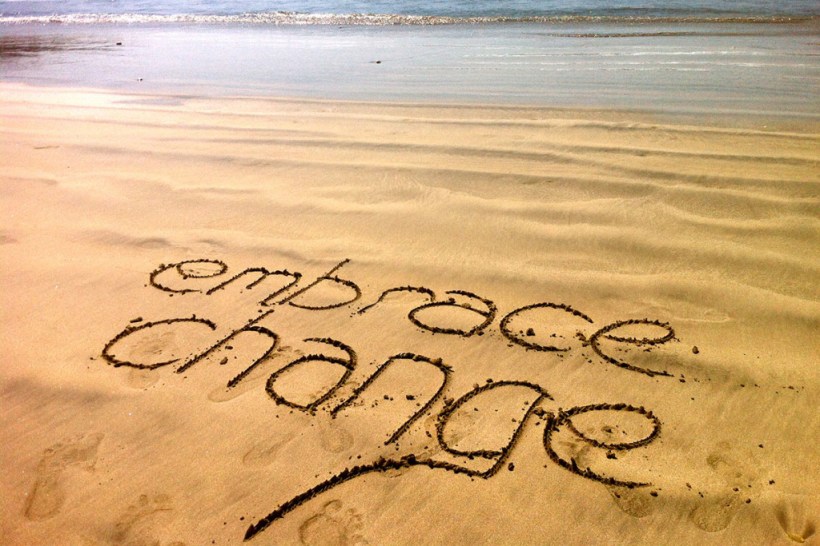
Ch-Ch-Ch-Changes

During my two week stay at the Hospital, one of the group sessions was about making a change in your life.  And let’s be honest…I could make some good changes to my mindset and life.  So with my happiness as a goal, I was very attentive to the instructor and ready to fill out my Change Plan Worksheet Outline.

If you want to follow along with me, here is a copy of the Change Plan Worksheet.  You can print this out or review it to decide what kind of changes may fit your personal goals and growth towards a happier you.

Here, is where I’m going to go step-by-step through my own.  This will not only give you an example, but will also show you that even small changes can make a big difference.  And the more small changes that you make, the bigger the change is to the larger picture.  I hope you understand where I’m coming from.  If not, feel free to leave me questions in the comments section below.

  • The changes I want to make are:  to set up personal boundaries for myself and to not be so hard on myself or take on the worries of the world.
    • List specific areas or ways in which you want to change: I need to say “NO” more often and realize that it’s not selfish to take care of myself; not faulting myself.
    • Include positive goals (beginning, increasing, improving behaviors): increasing my personal levels of happiness and positivity.  Increasing the number of thoughts that I “challenge”.
  • The most important reasons why I want to make these changes are: to be a happier & healthier version of myself.  Because my life depends on it.
    • What are some likely consequences of action and inaction: I could end up with a different outlook on life and a more positive mindset.  The other consequence could be a life full of unhappiness and anger; leading to the possibilities of suicide.
    • Which motivations for change seem most important to you?  My ultimate happiness and quality of life need to be improved.
  • The steps I plan to take in changes are:  to take baby steps and to worry less about what people think of what my choices are or what I’m doing.
    • How do you plan to achieve the goals?  By first achieving smaller goals that will accumulate to change the bigger picture in my life.
    • Within the general plan, what are some specific first steps you might take?  Setting healthy and clear boundaries for myself; begin cultivating the life that I want to lead and making the changes that I think are in my best interest.
    • When, where and how will these steps be taken?  They will begin with today, it will take a lot of emotional and mental energy.  So, I plan to take them on one by one…individually, so that I do not add to my anxiety and/or become overwhelmed.
  • The ways other people can help me are:  Others can hold me accountable for the goals that I’ve made clear to them.
    • List specific ways that others can help support you in your change attempt: Supporting my decisions and doing what they can to ensure that I follow through with my goals.
    • How will you go about eliciting others’ support?  I plan on stating my goals clearly to a hand full of people.  Then, it will be important for me to acknowledge issues as they arise and getting their help with challenging the unhelpful thought or in eliminating my discouragement.
  • I will know that my plan is working if:  I am meeting my short-term, smaller goals to achieve progress towards a larger outcome.
    • What do you hope will happen as a result of the change?  I hope that I can find hope, peace, personal happiness and the light that I know can shine out of me.
    • What benefits can you expect form the change?  A more consistent and positive mindset.  Hopefully to feel more at ease within my own skin, more confident, and less worrisome with whatever anyone else thinks or with burdens that are not my own to carry.
  • Some things that could interfere with my plans are:  Relapse, not following through, people in general with their negative thoughts and attitudes that will only bring me down.
    • Anticipate situations or changes that could undermine the plan:  There are situations where someone may disagree with what I say I need for myself.  There are people who may question whether or not I am competent.  There will always be someone that is just sitting on that back burner waiting for me to fail – and they would absolutely love it.
      • What could go wrong?  I could not achieve goals that I have set for myself or an event or person could interfere with my progress, only holding me back.
      • How might you stick with the plan despite the changes and/or setbacks?  I will challenge myself by attempting to change my own perspective.  I will be more flexible and if I cannot achieve one goal, I will substitute it by completing another.  I will realize that other people are not living my life and that there are always ways to go around or over each obstacle put in my path.

My personal goals may be humorous to you.  But, they are mine.  You get to decide what kind of goals to make for yourself and ONLY yourself.  You cannot depend on anyone else to make the desired changes to your life for you.  That’s unreasonable and impossible.  And you can’t do nothing and expect things to end up differently.  This is a decision that you have to make for yourself.  And that you will have to follow through with, for yourself.  You can ask for help from others, by asking to be held accountable for your desired changes.  But, after that….it’s all up to you.  By being held accountable, it’s asking for support – but that person isn’t going to force you to make the change that you already said you wanted.  And when you get discouraged, keep looking at the horizon.  It’s in front of you, not behind you.  Don’t be afraid of making smaller goals or changes.  Because after completing a couple of those, you’ll be headed in the right direction!

I wish you luck and am sending my support.  You now know a portion of the goals I’ve set out to achieve through intensive group therapy.  I plan to continue sharing….

Here are two more handouts that you may find helpful in this process.  I encourage you to at least read them over and think about them for a while:

Part 1 – Challenging My Unhelpful Idea

Part 2- Recognizing Discouragement, Out-thinking Discouragement, Seeking Out Encouragement, & Courage/Inner Strength Building Plan

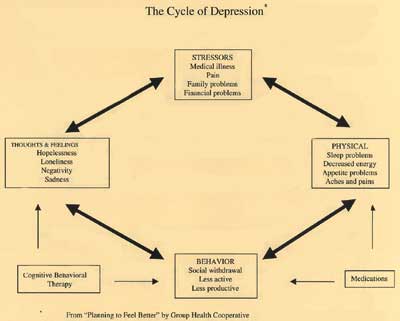
The Cycle of Depression

I’ll start off today, by telling you that I’m not in the most positive of moods.  Holidays are always hard on me for some reason.  I’m not really sure how to pull myself out, but I’m hoping if I can put energy into something positive, I won’t be feeding my own negativity.  I painted earlier…now I’m going to try writing as an outlet.

In my recovery, I have many decisions to make when I’m ready to ‘go back into the world’.  I have a fear of what people will think of me and how they will judge me.  But, the nurse told me to remember “they can only tarnish your reputation, they can not touch your character”.  And that’s something that I thought I should share, for anyone going through some of the same things that I am.  It doesn’t make it any easier to face them, but it is nice to realize that there is that part of you that no one can touch.  She also told me to make decisions based on all of the information at hand.  And if later information was gained, then to make a new decision based upon the new information in addition to what I already knew.

But that’s all neither here nor there…getting back on track…
The Vicious Cycle

hantwelve03

Stressors/Triggers -> Physical ->Behaviors->Thoughts & Feelings

Stressors-this is anything that adds to stress/anxiety in your life.  They also may be referred to as “triggers”. (ie. medical issues, family issues, financial problems, etc)
Physical-the physical effects of the stressor (loss of sleep, lethargy, appetite change, etc)
Behavior-life changes in behavior (isolation, less active, loss of interest, etc)
Thoughts & Feelings-How everything begins to make you think and feel differently (hopelessness, loneliness, negativity, sadness, etc)

For me, I’m not exactly sure where my stressors actually came from, but I believe them to be an accumulation over time.  I am a ‘worrier’ by nature and am in a constant state of disarray.  I worry about money, if I’ll always be depressed, how I affect different people in my life and often hold on to the past.  This, with a long line of worries that stem from work and family matters escalated into physical issues.  It is very important to be able to identify your own triggers ahead of time, so that you know what to expect when presented with those scenarios.  Remember, avoidance is not always the answer.

My physical symptoms came to me in the form of not being able to sleep at night.  Some nights, I would just lay there, waiting for the alarm to go off to start the next day.  I also experienced a decrease in my energy level and often found myself not feeling well at all.  It’s crazy what your mind can do to you.  But, it was definitely taking it’s toll.

I guess somewhere between my physical and behavioral changes, I started medications…which now with the PHP program have changed AGAIN.  But, it really needs to be something that works for you.  And some medications do have side effects to keep in mind.  In this case, I am tired feeling a lot of the time…but I have to weigh the pros and cons.  And for me to have to maybe take a nap, is much better than the feeling of my throat closing and the panic attacks that I would experience on a daily basis.  Panic attacks are scary and you feel like you have no control over the sensations that your body goes through at that time.

When it comes to behavioral changes, I get a little cloudy.  I try to think about how my behaviors may have changed over time, but for me I think it was a gradual thing.  Because although I sought out help prior to entering the PHP program, the therapy and meds just weren’t really working…because I wasn’t doing my part.  I think that I isolated myself off from people (but, I never really had that many people around anyways).  I stopped communicating as much about how I was feeling and I lost interest in the activities that I used to very much enjoy.  Now that I think about it, I stopped crafting, I stopped talking, I stopped making any effort towards wellness.

That leads me to the next topic of Thoughts & Feelings.  I became very hopeless.  There was nothing in this world that could make me feel as though I could ever be better than I am/was.  I’m still struggling with this today, if you can’t tell.  When I entered the PHP program, I could sit in the middle of the room anywhere and be surrounded by people – but I would feel so alone and lonely.  Like I couldn’t relate to anyone.  Like it didn’t matter anyways, regardless if I had anything to contribute or not.  So, why bother?  You know?  And the negativity never ends with me.  I’m not good enough…I can’t do enough…I can’t pull myself out of this rut and I really do not want to get out of this bed.

This is my cycle.  And in group the other day, we started to learn how to break the cycle.  But, as you can tell from the above…I haven’t QUITE made it there yet.  I’m fighting it with my entire being.  But, I just can’t kick the bad habits over night.  And that’s okay.  It’s important that I be patient and easy on myself about it, because the changes WILL come.  They just won’t come quickly.  And that may vary for someone else…but, we don’t always move at the same speed.

So, maybe you’re wondering how people like me start to break the cycle….

Breaking the Cycle

There is no easy quick-fix for breaking the cycle of depression that I’ve found.  And if you have something that works for you, that’s great.  For me, it’s going to be a process.  But, I’m taking the baby steps that I need to in order to get there.

Below are some things that I am trying to practice and look at in my own recovery.  They may be helpful for you, too.  But, believe me when I say this is all going to take some serious commitment.

Establishing a Routine
Structure and Consistency are very important in recovery from depression.  You need to feel like you’re doing something and getting something done.  The completion or achievement gives you a self-confidence boost.  And by creating that structure in your life, you are also learning to make time for YOURSELF.  This means more relaxation and downtime can be worked into your daily routine.  The balance that this brings to your life is very important.

I could not agree more with the routine establishment.  I make sure that I have small goals that I want to achieve each day right now.  And accomplishing those goals is up to me.  If I complete them quickly, I have more time for myself and for relaxation.  If I choose to do them slowly, well then that’s on me.  But, I find a sense of purpose and meaning in accomplishing each task that I had designated to myself.  It’s just a little boost of self-esteem, no matter how small it may be -it’s still in the right direction.

Social Support

If you’re like me, you may not have many people that you open up to about certain things.  But, you probably at least have one person in your life that you don’t mind venting the small things to.  That’s what this is.  It’s important to be able to vent out small frustrations so that they don’t become larger, unhappier feelings.  The best thing about venting to others or talking things through with whomever you choose, is that person provides you with a new perspective on things.  So, where you might find darkness and frustration, that person may be able to shine a little light on it for you.  Often times, things aren’t as bad as we make them out to be.  But, it takes confirmation from another person for us to realize that we could be looking at the situation from a much different angle.

Like I said, I don’t have many people that I open up to.  But, even talking to someone online or a phone call to your one friend may make the difference you need in that moment.

Professional Support Network

This is where your therapist, psychiatrist, psychologist, pastor or what have you come in to play.  These are people that provide you with professional support.  They are people that you count on for a professional opinion.  They have to be there for you when you need them…it’s their job after all.  And the best thing is that Confidentiality Agreement.  You know you can open up and tell this person anything..and there’s nothing that they can say or do about it.   Talk to them about your needs and concerns and do not be afraid to ask them for advice.

I have a psychiatrist and psychologist, personally.  While the psychologist helps me to meet my mental needs, such as venting and providing perspective; my psychiatrist provides me with physical support such as medications.  My psychiatrist is actually the person who got me into reading up on Mindfulness and Acceptance as a form of therapy.  I’ve really enjoyed it and I’ve learned a lot about myself in the process.  My psychologist is the person I credit for helping me put it into practice.  She’s just terrific.

Expecting the Slip Ups and Down Days

This is important and you should say it with me…you need to expect down days, because down days are going to come.  I mean, there is no other way to look at it.  You can’t have good days without bad days, too.  It’s how we react to those bad days and what we do with them that matters and makes or breaks us at the time.  Do not believe on these days that you are back to “square one”.  You aren’t.

I’m guilty of being rather hard on myself when they roll around.  You already know that I had a habit of cutting myself and becoming violently angry with myself when they rolled around.  But, I’m working on remembering that I’ve survived every worst day of my life this far…and I’m going to continue to survive every worst day that comes my way.  It’s really important that I not be too hard on myself when I do slip up, because like a toddler learning to walk – I will have to fall fifty times before I can even take that first step.

Random Notes and Thoughts Today

“Let me let go of what I am, so that I can become what I may be.”
“Don’t insist on always being right.  Your way, is not the ONLY way.”
“You are a Student in Life-you are always learning.”

The 4 Main Areas of Life to Look at in Order to Stay Healthy

  1. Physical
  2. Mental
  3. Social
  4. Spiritual

The following tools are my own.  They are what I use to record and track my moods.  There are also tools that I use to ensure my own happiness and well-being.  The reason that I use the tools below are to track patterns that I can use to bring to my health professional when I meet with them, to determine our next course of action.

the-wholly-healing-experience-daily-self-care-worksheet

a-healthy-me

mood-tracker

Daylio

Nice Guys Finish Last…

I’m sure you’ve always heard the phrase “Kill them with kindness.”  But, while being kind is always a good thing, too much kindness can turn into something very bad.

In my PHP group, we had a lesson on learning to be assertive and the importance of it.  It not only creates boundaries for yourself, but also teaches others that you’re not the pushover they believe you to be.

I’m not going to lie.  This one I am going to struggle with.  I have been known in the past to be assertive, but somewhere along the way I became one of “the nice guys”.  You know the one – the person who is always picking up slack, overachieving, doing for others, giving and never taking – the person that NEVER says a simple “no”.

I have never liked confrontation and I have been known to avoid it like the plague, itself.  It’s hard on me and I always feel like if I’m confronted, that I have to be the “yes person” or as if I have to cower from the other person/people involved.  Somewhere along the line, I developed this fear.  And I haven’t been able to shake it.

Here you will find a Conflict Management Styles Quiz.  I encourage you to take it and find out who you are in terms of conflict and confrontation. When I took it, I surprisingly came out as the Harmonizer.  Which means that I’m a peacemaker, but that I often get taken advantage of.  It was true.  That describes me to perfection.  How did you do?

If being assertive is not your style, like with me.  Do you know what your style is?  Maybe you’re one of the following:

  • The Nice Person – who is afraid to say anything or do anything that might offend anyone, especially your peers, because they will call you other names other than “nice”.
  • The Whiner-who constantly whines and complains about
    • the services you need and are not receiving
    • how others treat you when you ask for services
    • how professionals treat you when you try to discuss your progress (or lack there of)
    • how bad everything is-but does nothing about it
  • The Clinging Vine-who clings to others and expects them to stick up for your rights and intervene on your behalf
  • The Silent Victim-who has resigned themselves to lack of needed services because “there’s nothing i can do about it”
  • The Fairy Princess-who expects everything to happen, and every service to bne delivered without any effort on your part
  • The Waiter-who waits for a miracle to happen, for something someone promised, who waits and waits and waits for someone else to do something
  • The Bombshell-who fires angry missiles sporadically, instead of calmly and methodically building a good case for what you need
  • The Scaredy Cat-afraid that “if I make trouble, they’ll get back at me”
  • Appeaser-who compromises your own needs because “if I ask for too much, they won’t give me anything”
  • The Sellout/Self-Advocate-who makes deals with those in charge to get services for themselves and pressures others not to ‘rock the boat’

I don’t know where you stand.  Only you can answer that for sure.  But, I am somewhere between “the nice person” and “the silent victim”.  It really depends on the situation and my mood.  If I’m pushed too far, I could randomly and thoughtlessly turn into “the bombshell” due to a mood.  That often happens if I feel as though I’m under attack.

I also fear damaging relationships with others, along with being disliked.  Who wants to feel disliked?  Especially at work or some place where you spend excessive amounts of time.

Wouldn’t it feel good to call somebody out just once?  Wouldn’t it be nice to say “no” for a change?  Think of how empowering a tiny gesture could feel for just one moment.  When I was asked to think about it, it made me feel great.

This where I am going to show you that there is a way to request a behavior change.  I still have a hard time with it because it’s still new to me.  But, when I looked at that sheet, I think I felt a bit of a smile cross my face.  I guess that it is possible to be nice/tactful while asking someone else politely to change their behavior.  Who knew?

It requires a lot of change on my part, which is just one more thing to add to the list of things I am fearful of.  Because I hate uncertainty.  There’s actually a lot about change that I do not like.  But, I’m learning that it isn’t always a bad thing either.  This one is going to take a while to sink in, but in group they do their best to inspire us to be open to the ideas they present.  For me, I like quotes…quotes that make me think and keep me moving in a positive direction.  So, when they handed me this worksheet, I was all too excited to find something that I related to.

Can you guess the quote that I chose?  I chose the quote by Maria Robinson that says ” Nobody can go back and start a new beginning, but anyone can start today and make a new ending”.  And I honestly think that’s true.  I can’t change where I have come from, or where I have been…but, I can use those experiences now to change the direction I am headed in.  Since this group let out, that has been my plan.

If you have a favorite quote from the list that you can relate to, please feel free to share it with me.  I know change is hard and it’s not going to come easy for me either.  I’m going to have to work for it.  And being assertive is one of the best things that I can do for myself to start anew and to make sure that I’m being treated in a way that I deserve-by myself and by others.


Goal Setting, For Dummies Like Me…

So, as you know by now, I was admitted into a Partial Hospitalization Program (PHP) at the local mental health facility.

I would describe my first day as being anxiety ridden and fearful.  I didn’t know what to expect and thought I was going to get nothing but static as I walked into the room.  They had computer issues that morning and were already late getting me over there, so everyone was there already when I arrived.

The day hospital is where my PHP takes place each day.  It’s nice because it’s in this little house away from the actual impatient hospital.  There are several offices inside, a full kitchenette, two bathrooms, a “Family Room” where our group sessions take place…and even a patio where we can step out for fresh air if need be.

As I walked through the door, I was asked to sign in on a sheet of paper that would log my time there in the facility.  I was then given a tour of the house.  And when I was told to find a place in the “Family Room”, I did so very slowly and hesitantly.  People were looking at me.  People of various ages, backgrounds and with different issues than mine (as far as I knew).  I was very quiet and kept to myself and felt like curling into a ball in my spot at the table.  Here and there, people would make small gestures of kindness…such as introducing themselves to me…but that uneasy feeling just didn’t want to leave me alone.

The first thing that happened was that I had to see my Nurse to have my vitals checked.  I have never met such a kind, inspiring person.  This Nurse is wonderful.  And I’m sure I’ll get more into her as my story develops.

That day, I was pulled in and out of the group room so many times….to see the doctor, to see the case worker, to talk to this/that person.  It was so chaotic.  I felt like I was missing out on every opportunity there was for me to gain anything from my situation.  But, there was one session that day I was able to take in completely.  And that happened to be the Nurse’s group on goal setting.

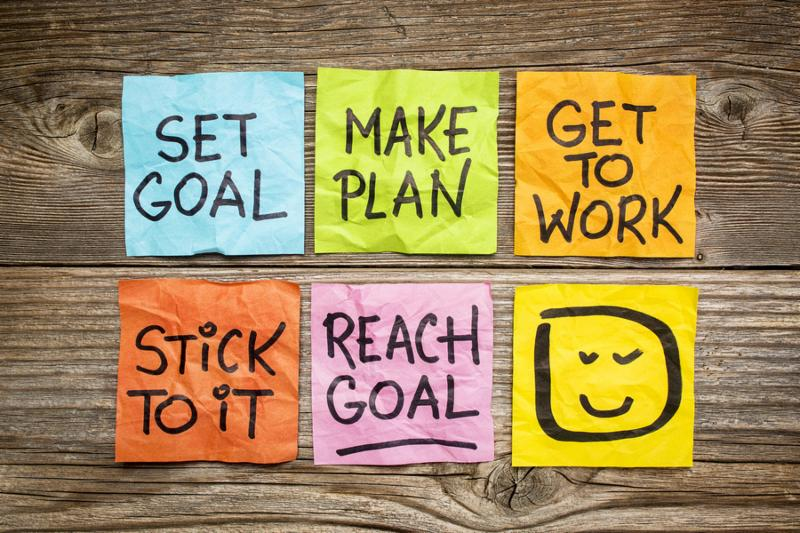
Here are the Guidelines for Goal Setting, as given by the Nurse.  The goals also had to be SMART.  If you’re anything like me, you’re completely thrown off when put in this position.  I had no idea what my goals should be be.  I was lost when she was going over the details of it all.  And to be honest, I felt quite overwhelmed.

Before I share with you what my personal goals were that day, I’ll give you a few notes that I took down in my journal as I listened to the Nurse speak.

  • Goals should ALWAYS be positive
  • one member of the group said this that resonated with me, “Goals make you live life intentionally.”
  • Life is like the Sea, without a compass we will drift and fall into chaos.  Goals create that compass for our life, providing us with direction to keep us from drifting.
  • Goals are NEVER to depend on anyone else.  And if someone else is involved in your goal, you MUST acquire their permission as the goal itself.
  • Your goal should be something that you REALLY want and should always be positive.
  • “Don’t ever put your hat where you can not reach it.”
  • Don’t expect to build a house in one day, first you must lay the foundation (small goals), then you can start adding bricks, and eventually you will have a house (a larger goal).
  • It is okay to be flexible with your goals, as long as you replace one goal with something positive that continues to work towards your larger goal.
  • In everything you do, think about what the benefit is.  If it comes back no good, empty or blank — let it go, it’s not for you.

Since this was the only part of the group’s day that I was part of, I participated.  I know that my overall goal is to find happiness again and to lead a more meaningful and happier life.  I want to find my light again.  But, to think of minimal goals for the weekend was tough for me.  So I sat there with my pen and paper and made the goals to: clip my dog’s toe nails, read two chapters of my book, to complete a worksheet I had been given earlier that day and to not bring harm to myself (self-harm/cutting).

As I was listening to everyone else’s goals for the weekend, I realized how small mine were and how simple they seemed to be accomplished.  When I said something about it, muttering to myself how silly they sounded, the Nurse spoke up.  She said it takes baby steps to achieve the bigger steps…and that if those things needed to be done, they were still good goals to have.

Over the course of the weekend, I referred to my sheet.  And as each goal (no matter how small it may have been) was checked off, I felt a sense of accomplishment and like I had done something to be proud of.  It sounds silly, but I encourage you to try it..and you’ll see exactly what I mean.

I don’t have a copy of the worksheet that I was given available to me, but you can create your own.  Simply say that you will _____________________________________ using the SMART acronym provided to you.  And as you achieve each goal, mark how you feel.  It should be quite the rewarding experience!